If you started a blog in 2026 hoping to rank on Google the same way people did in 2020, you’re in for a surprise. SEO has changed — a lot. AI Overviews now sit at the top of search results, zero-click searches are eating into traffic, and Google is getting scary good at telling human-written content apart from generic AI text.
But here’s the good news: ranking in 2026 is still very possible, even for beginners. You just need to understand what actually matters now. This guide will walk you through everything — from the biggest SEO trends this year to the exact steps you need to get your first AdSense approval.
Let’s get into it.
Why SEO in 2026 Feels So Different
A few years ago, SEO was mostly about keywords, backlinks, and word count. Today, three big shifts have changed the game:
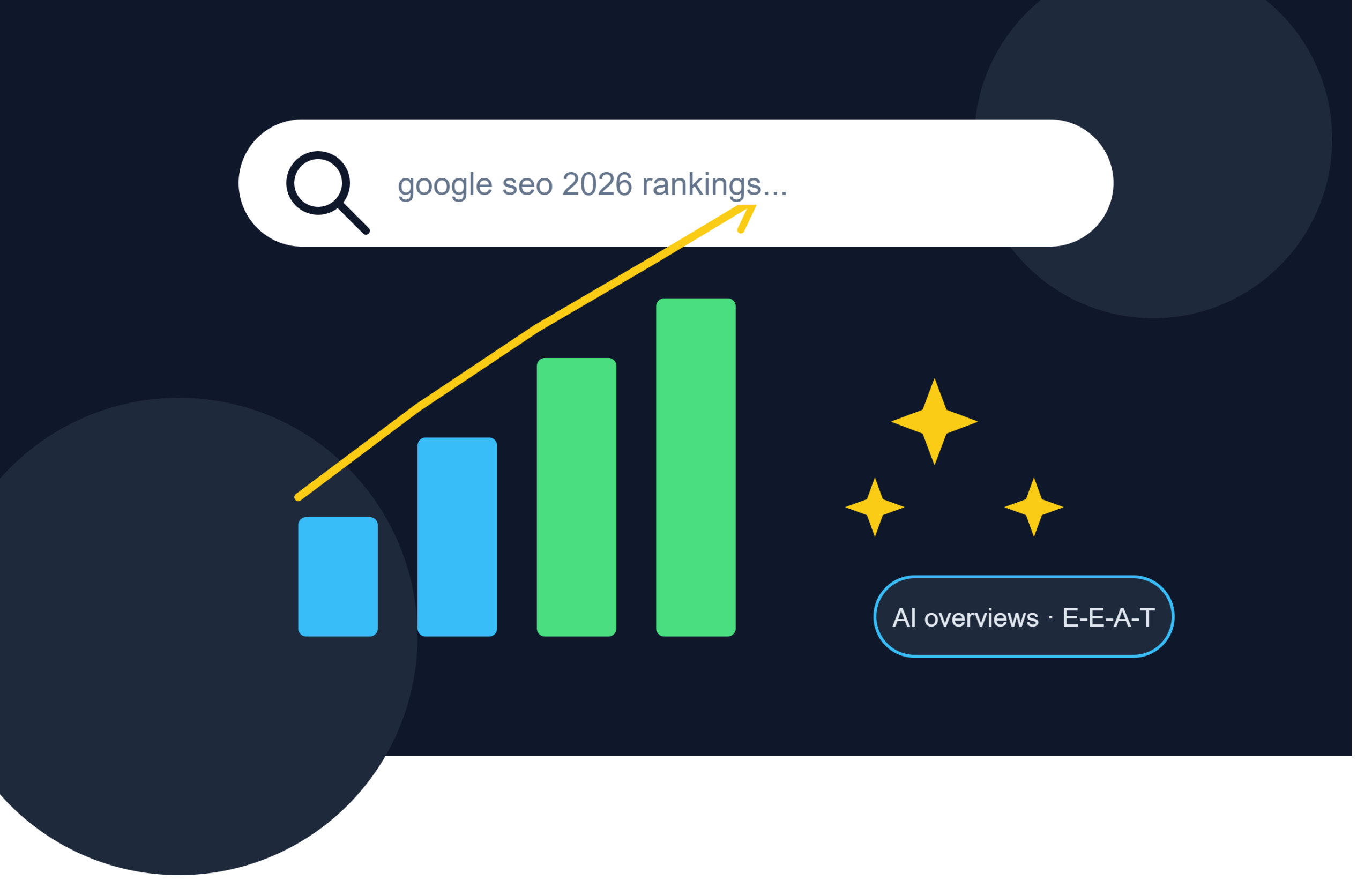
- AI Overviews now answer many queries directly on the search page, before users even click a link
- Generative Engine Optimization (GEO) has become just as important as traditional SEO, since people now search inside ChatGPT, Gemini, and Google’s AI features
- E-E-A-T (Experience, Expertise, Authoritativeness, Trustworthiness) is now a core ranking factor, not just a guideline
This doesn’t mean SEO is dead. It means SEO has grown up. Google still wants to rank the best content — it’s just gotten much smarter about figuring out what “best” really means.
The Biggest SEO Trends in 2026 You Need to Know
1. AI Overviews Are Changing How People Search
When someone searches a question, Google often shows a summarized AI answer right at the top. This means simple, surface-level content (like a one-line definition) may never get clicked at all.
What this means for you: Your content needs to go deeper than what an AI Overview can summarize. Add personal insights, original examples, and details that require real research or experience.
2. Generative Engine Optimization (GEO) Is the New Frontier
GEO is about optimizing your content so AI tools like ChatGPT, Gemini, and Perplexity actually cite and recommend your website when users ask questions. It works alongside traditional SEO, not instead of it.
Simple ways to improve for GEO:
- Write clear, direct answers early in your article
- Use structured headings so AI tools can easily extract information
- Back up claims with real data, sources, or personal experience
- Keep information accurate and up to date
3. E-E-A-T Is No Longer Optional
Google wants to know: does this person actually know what they’re talking about? That’s why E-E-A-T matters so much now.
- Experience – Have you actually used the product, tool, or method you’re writing about?
- Expertise – Do you understand the topic well enough to explain it clearly?
- Authoritativeness – Are other sites or people referencing your content?
- Trustworthiness – Is your website secure, transparent, and honest with readers?
A simple way to boost E-E-A-T as a beginner: add an “About the Author” section, be transparent about who runs the site, and share real examples or screenshots instead of generic statements.
4. Human-Written Content Is Making a Comeback
AI writing tools are everywhere now, and that’s exactly why pure AI content struggles to rank. Google can detect patterns typical of AI-generated text — repetitive structure, generic phrasing, and lack of a real point of view.
The winning formula in 2026 isn’t “AI vs human” — it’s AI-assisted, human-refined content. Use AI to speed up research or drafting, then rewrite it in your own voice, add your own examples, and make sure it sounds like a real person wrote it. Because it should.
5. Zero-Click Searches Are Growing
More searches now end without a single click, since users get their answer directly from the search page. This is frustrating, but it also means ranking for slightly more detailed, specific questions (long-tail keywords) is often more valuable than chasing broad, high-competition terms.
6. User Experience (UX) Directly Affects Rankings
Site speed, mobile-friendliness, easy navigation, and low pop-up clutter all influence how Google ranks your pages. A slow, cluttered site frustrates readers — and Google notices when people bounce back to the search results quickly.
Step-by-Step: How to Actually Rank in 2026
Step 1: Pick a Focused Niche
Don’t try to write about everything. Choose one topic area (like AI tools, personal finance, health, or travel) so Google starts to see your site as an authority in that space.
Step 2: Do Real Keyword Research
Use free tools like Google Keyword Planner, Ubersuggest, or AnswerThePublic to find what people are actually searching for. Focus on:
- Long-tail keywords (more specific, less competitive)
- Questions people ask (great for FAQs and AI Overviews)
- Search intent (are they looking to buy, learn, or compare?)
Step 3: Write Content That’s Genuinely Useful
Every article should answer the reader’s question better than what’s already ranking. Add:
- Real examples or case studies
- Step-by-step instructions
- Comparison tables or lists
- Your own opinion or experience
Step 4: Optimize On-Page SEO Basics
- Use your keyword naturally in the title, first paragraph, and one or two headings
- Write a clear meta description
- Use short paragraphs and bullet points for readability
- Add internal links to your other blog posts
- Compress images and use descriptive alt text
Step 5: Build Trust Signals
Add an About page, Contact page, and Privacy Policy. Show your credentials or experience where relevant. These small details matter a lot for both readers and Google’s trust evaluation.
Getting Google AdSense Approval in 2026
Many beginner bloggers get rejected by AdSense, usually for the same few reasons. Here’s how to avoid them:
- Have enough original content – Aim for at least 20-30 well-written, useful articles before applying
- Avoid thin or AI-only content – Every post should offer real value, not just reworded information
- Add required pages – About, Contact, and Privacy Policy pages are essential
- Make sure your site is easy to navigate – Clear menu, working links, mobile-friendly design
- Use your own domain – A custom domain (not a free subdomain) looks more professional and increases approval chances
- Be patient with traffic – You don’t need huge traffic, but some organic visitors help show your site is active and legitimate
Comparison Table: Old SEO vs SEO in 2026
| Factor | Old SEO Approach | SEO in 2026 |
|---|---|---|
| Content goal | Rank for keywords | Answer real questions better than AI can summarize |
| Content creation | Any content, quantity-focused | Human-refined, experience-based content |
| Search visibility | Blue links only | AI Overviews, zero-click answers, GEO citations |
| Ranking factor focus | Backlinks, keyword density | E-E-A-T, UX, and originality |
| Writing style | Keyword-stuffed | Natural, conversational, helpful |
| AI’s role | None | Assistant for research and drafting, not the final writer |
Pros and Cons of SEO in 2026
Pros:
- Genuinely helpful content has a real chance to outrank bigger, generic sites
- Long-tail and niche topics face less competition
- Trust and authority build over time, creating long-term traffic
- AI tools can speed up research and drafting significantly
Cons:
- AI Overviews and zero-click searches can reduce total clicks
- Competition for E-E-A-T signals means more effort per article
- Results take longer to show since Google favors proven trust over time
- Pure AI-generated content is increasingly filtered out
Frequently Asked Questions
1. Can I still rank on Google in 2026 as a complete beginner? Yes. It takes more effort than before, but focused, genuinely helpful content still ranks well, especially for specific long-tail topics.
2. What is GEO in SEO? GEO (Generative Engine Optimization) is the practice of optimizing content so AI search tools like ChatGPT and Gemini reference or recommend your site when answering user questions.
3. Does using AI to write content hurt my SEO? Not necessarily. The problem is publishing raw, unedited AI content. Using AI as a starting point and then adding your own voice, experience, and details works well.
4. How long should my blog posts be in 2026? There’s no fixed number. Focus on covering the topic completely and clearly rather than hitting a specific word count.
5. What is E-E-A-T and why does it matter? E-E-A-T stands for Experience, Expertise, Authoritativeness, and Trustworthiness. Google uses it to judge whether your content comes from a credible, reliable source.
6. How many articles do I need before applying for AdSense? Most bloggers see better approval chances with 20-30 quality articles, though there’s no official minimum.
7. Do backlinks still matter in 2026? Yes, but quality matters far more than quantity. A few links from relevant, trustworthy sites help more than dozens of low-quality ones.
8. What are zero-click searches? These are searches where the user gets their answer directly from the search results page (often via an AI Overview) without clicking any website.
9. Should I focus on SEO or GEO? Both. They overlap significantly — clear, well-structured, trustworthy content tends to perform well in both traditional search and AI-generated answers.
10. What’s the biggest SEO mistake beginners make in 2026? Publishing generic, AI-only content without adding personal insight, real examples, or original value. This is the fastest way to get filtered out by Google.